

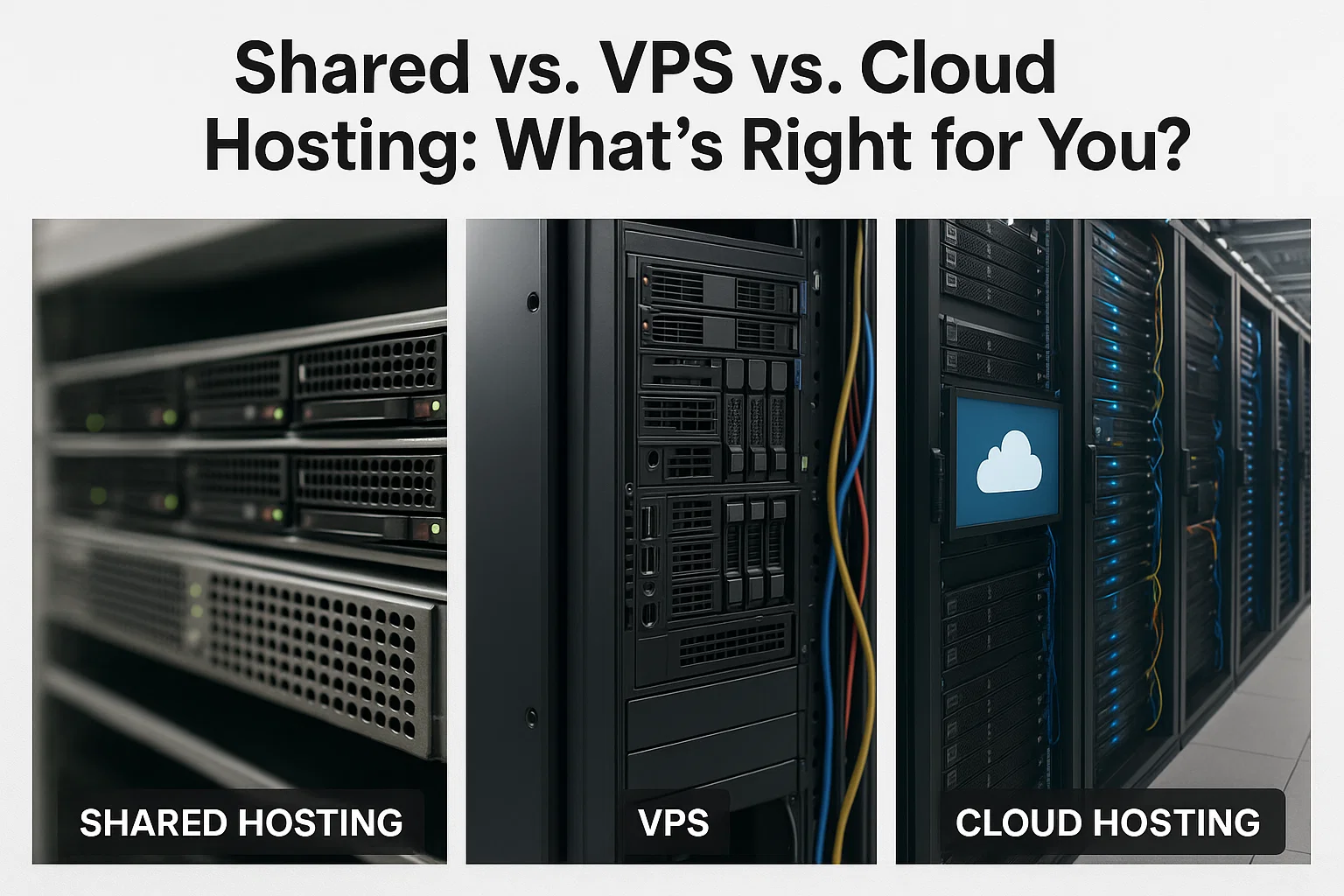
In the ever-evolving digital landscape, selecting the right web hosting solution is a crucial decision that can directly affect your website’s performance, scalability, and security. Whether you are launching a personal blog, an eCommerce store, or a business website, understanding the differences between shared hosting, VPS hosting, and cloud hosting is essential. Each type of hosting serves specific needs and comes with its advantages and limitations, making it important to align your choice with your website goals, budget, and technical expertise.
As we step into 2025, web hosting technology has advanced significantly. Providers now offer more flexibility, better performance, enhanced security, and user-friendly tools than ever before. This guide will break down shared hosting, VPS hosting, and cloud hosting, examining their features, benefits, drawbacks, and ideal use cases. By the end, you’ll have a clear understanding of which hosting solution is right for your website.
Understanding Web Hosting
Before diving into the specifics, it’s important to understand what web hosting is. At its core, web hosting is a service that allows your website to be accessible on the internet. A web host provides storage space on a server where all your website files—HTML, CSS, images, videos, databases—are stored. The host also ensures that your site remains accessible to visitors around the clock.
The type of hosting you choose affects your website’s speed, reliability, security, and scalability. Here’s a brief overview of the most common types of hosting:
-
Shared Hosting: Multiple websites share the same server resources. It’s cost-effective and beginner-friendly but may have limited performance and control.
-
VPS Hosting (Virtual Private Server): A virtualized server environment that provides dedicated resources within a shared server. Offers more control and scalability than shared hosting.
-
Cloud Hosting: Websites are hosted on multiple interconnected servers, providing high availability, automatic scalability, and robust performance.
Understanding these differences helps you make an informed decision that aligns with your website’s goals and expected growth.
Shared Hosting: Affordable and Beginner-Friendly
Shared hosting is the most popular hosting option for beginners, bloggers, and small websites. In shared hosting, multiple websites share a single physical server, including its CPU, RAM, and storage. This makes it an affordable option but comes with some limitations.
Key Features of Shared Hosting
-
Low Cost: Shared hosting plans are generally the most budget-friendly, making them ideal for personal blogs and small websites.
-
Managed Server Maintenance: The hosting provider manages server maintenance, security, and updates, reducing the technical burden on the user.
-
User-Friendly Tools: Hosting providers often include easy-to-use control panels like cPanel, one-click WordPress installation, and website builders.
-
Limited Resources: Resources like CPU, RAM, and bandwidth are shared among all websites on the server.
Advantages of Shared Hosting
-
Affordability: Perfect for beginners and those on a tight budget.
-
Ease of Use: Minimal technical knowledge is required.
-
Quick Setup: You can get your website online in a few minutes.
-
Managed Security: The hosting provider handles updates, security patches, and monitoring.
Limitations of Shared Hosting
-
Performance Issues: Your website’s speed and uptime can be affected by other sites on the server.
-
Limited Control: You may have restrictions on server configuration and software installation.
-
Scalability Constraints: Shared hosting may not handle high traffic or resource-intensive applications efficiently.
Ideal Use Cases for Shared Hosting
-
Personal blogs or portfolios
-
Small business websites
-
Informational or static websites
-
Beginners exploring website management
Shared hosting is an excellent starting point for those new to website management. Its affordability and ease of use make it appealing, but as traffic grows, you may eventually need to upgrade to a more robust hosting solution.
VPS Hosting: Balance Between Cost and Control
VPS (Virtual Private Server) hosting bridges the gap between shared hosting and dedicated hosting. It provides a virtualized server environment within a physical server, giving each user dedicated resources such as RAM, CPU, and storage. This allows for better performance, increased security, and greater control over server settings.
Key Features of VPS Hosting
-
Dedicated Resources: Unlike shared hosting, VPS users have allocated resources that are not affected by other websites.
-
Root Access: Users can install software, configure settings, and customize the server environment.
-
Scalability: VPS hosting allows easy upgrades of resources to handle increased traffic.
-
Managed or Unmanaged Options: Users can choose managed VPS for technical support or unmanaged for full control.
Advantages of VPS Hosting
-
Improved Performance: Dedicated resources ensure your website runs smoothly even during traffic spikes.
-
Enhanced Security: Isolation from other websites reduces the risk of malware or hacking.
-
Flexibility: Customize server configurations to meet specific application requirements.
-
Cost-Effective: More affordable than dedicated hosting while offering similar control and performance.
Limitations of VPS Hosting
-
Requires Technical Knowledge: Unmanaged VPS may require server administration skills.
-
Higher Cost Than Shared Hosting: VPS is more expensive than shared hosting, which may not be suitable for beginners on a tight budget.
-
Maintenance Responsibilities: For unmanaged VPS, users are responsible for updates, security, and backups.
Ideal Use Cases for VPS Hosting
-
Medium-sized business websites
-
Growing eCommerce stores
-
Resource-intensive applications
-
Developers needing a customizable hosting environment
VPS hosting offers a balance of affordability, control, and performance, making it an excellent choice for growing websites that outgrow shared hosting but do not yet require dedicated servers.
Cloud Hosting: Scalability and Reliability
Cloud hosting has emerged as a popular solution for businesses and websites requiring high performance, scalability, and reliability. Unlike traditional hosting, cloud hosting uses multiple interconnected servers to host your website, ensuring resources are automatically allocated based on demand.
Key Features of Cloud Hosting
-
High Availability: Multiple servers ensure your website remains online even if one server fails.
-
Automatic Scalability: Resources like CPU, RAM, and storage can scale automatically based on traffic.
-
Pay-As-You-Go Pricing: Many cloud hosts charge based on resource usage, providing cost efficiency.
-
Enhanced Security: Distributed architecture reduces vulnerability to attacks and server failures.
Advantages of Cloud Hosting
-
Performance: High-speed servers and optimized infrastructure deliver excellent website performance.
-
Reliability: Redundant servers minimize downtime and provide uninterrupted access.
-
Flexibility: Easily handle traffic spikes without manual upgrades.
-
Global Reach: Cloud providers often have multiple data centers worldwide for faster content delivery.
Limitations of Cloud Hosting
-
Complexity: Beginners may find cloud hosting setup more complicated than shared or VPS hosting.
-
Variable Cost: Pay-as-you-go pricing may fluctuate based on traffic and resource usage.
-
Technical Knowledge Required: While managed cloud hosting exists, fully unmanaged solutions require server administration skills.
Ideal Use Cases for Cloud Hosting
-
High-traffic websites and blogs
-
Large eCommerce stores
-
SaaS applications and online platforms
-
Websites requiring guaranteed uptime and global reach
Cloud hosting offers unmatched flexibility, scalability, and reliability, making it ideal for websites expecting rapid growth, fluctuating traffic, or critical uptime requirements.
Comparing Shared, VPS, and Cloud Hosting
Understanding the differences between shared, VPS, and cloud hosting helps you make an informed choice. Here’s a quick comparison based on key factors:
| Feature | Shared Hosting | VPS Hosting | Cloud Hosting |
|---|---|---|---|
| Cost | Low | Medium | Variable |
| Performance | Moderate | High | Very High |
| Control | Limited | Full (Root Access) | Full (Depending on Plan) |
| Scalability | Low | Medium | High |
| Security | Basic | Enhanced | Advanced |
| Ideal For | Beginners, small sites | Medium businesses, growing sites | High-traffic sites, enterprises |
| Technical Knowledge Required | Low | Medium to High | Medium to High |
This comparison highlights that no single hosting solution is perfect for every website. The right choice depends on your specific requirements, budget, technical skills, and growth expectations.
Factors to Consider When Choosing Hosting
When deciding between shared, VPS, and cloud hosting, consider the following factors:
-
Traffic Expectations: Websites with low traffic can start with shared hosting, while high-traffic websites require VPS or cloud hosting.
-
Budget: Shared hosting is the most affordable, but investing in VPS or cloud hosting can prevent performance issues as your site grows.
-
Technical Expertise: Beginners may prefer shared or managed VPS/cloud hosting to avoid server management complexities.
-
Performance Requirements: Resource-intensive websites benefit from VPS or cloud hosting.
-
Growth Potential: Choose a hosting solution that allows easy upgrades as your website expands.
-
Security Needs: ECommerce and business websites require enhanced security features offered by VPS and cloud hosting.
Evaluating these factors ensures your hosting choice aligns with both current needs and future growth.
Conclusion: Making the Right Choice
Selecting the right hosting solution is a strategic decision that affects your website’s performance, reliability, and growth potential. Shared hosting offers affordability and ease of use, making it perfect for beginners and small websites. VPS hosting provides a balance of control, performance, and cost, ideal for medium-sized businesses or growing websites. Cloud hosting delivers unmatched scalability, high availability, and global reach, suited for high-traffic websites, eCommerce stores, and enterprise applications.
In 2025, hosting providers have simplified the process with managed solutions, user-friendly dashboards, and advanced security features. Your decision should be guided by your website goals, traffic expectations, budget, and technical expertise. By understanding the differences between shared, VPS, and cloud hosting, you can make an informed choice that ensures your website is fast, secure, and ready for growth.
Investing in the right hosting solution not only supports your online presence today but also prepares your website for future success, providing the performance, scalability, and reliability necessary to thrive in the digital world.
